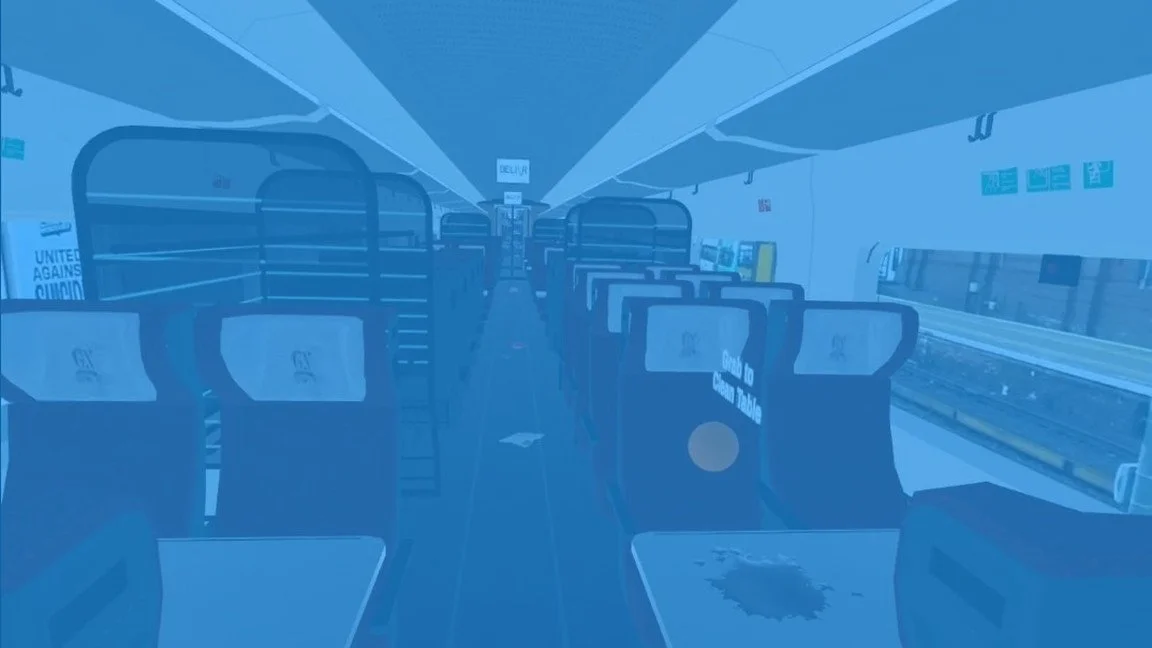
Let people practise the job before they do it for real. We design and build virtual reality training that puts your people inside a realistic version of their workplace. There they practise tasks, procedures and safety protocols, make mistakes safely and get instant feedback on how they did.
VRCraftworks is an immersive studio based in Brighton, building VR and AR since 2014 for organisations across the UK. Churchill's VR training programme for rail cleaning teams, which we built with their team, won the IWFM Impact Award for Technology Innovation in 2023.
Why use VR for training?
Manuals and slide decks tell people what to do. VR lets them do it. That matters most for practical, frontline and safety-critical work:
Learn by doing. Trainees walk the space, pick up the right equipment and carry out the real sequence of tasks.
Practise what you can't rehearse on the job. Suspicious items, sharps and other hazards can be practised safely, as often as needed.
Consistent every time. Every trainee gets the same standard of training, wherever and whenever they take it.
Instant, individual feedback. Trainees see what they got right and what they missed as soon as they finish.
More inclusive. Training that relies less on reading suits people who learn by doing, including neurodiverse learners.
Portable. Standalone headsets such as Meta Quest 2 mean training can run in a training room, at a depot or on site.
What we do
Bespoke VR training scenarios
We build training around your real tasks and standards: the environment, the equipment, the procedures and the order things must happen in. Your subject experts supply the content. We turn it into interactive scenes, narration and challenges in Unity.
Health and safety and security training
VR is ideal for the moments that matter most and happen least. In Churchill's programme, trainees learn to spot and report a suspicious item using the rail industry's HOT protocol and "See it. Say it. Sorted.". They also learn to deal with sharps safely and to choose the right protective equipment. Getting it wrong in VR has consequences they remember, without anyone getting hurt.
Onboarding built in
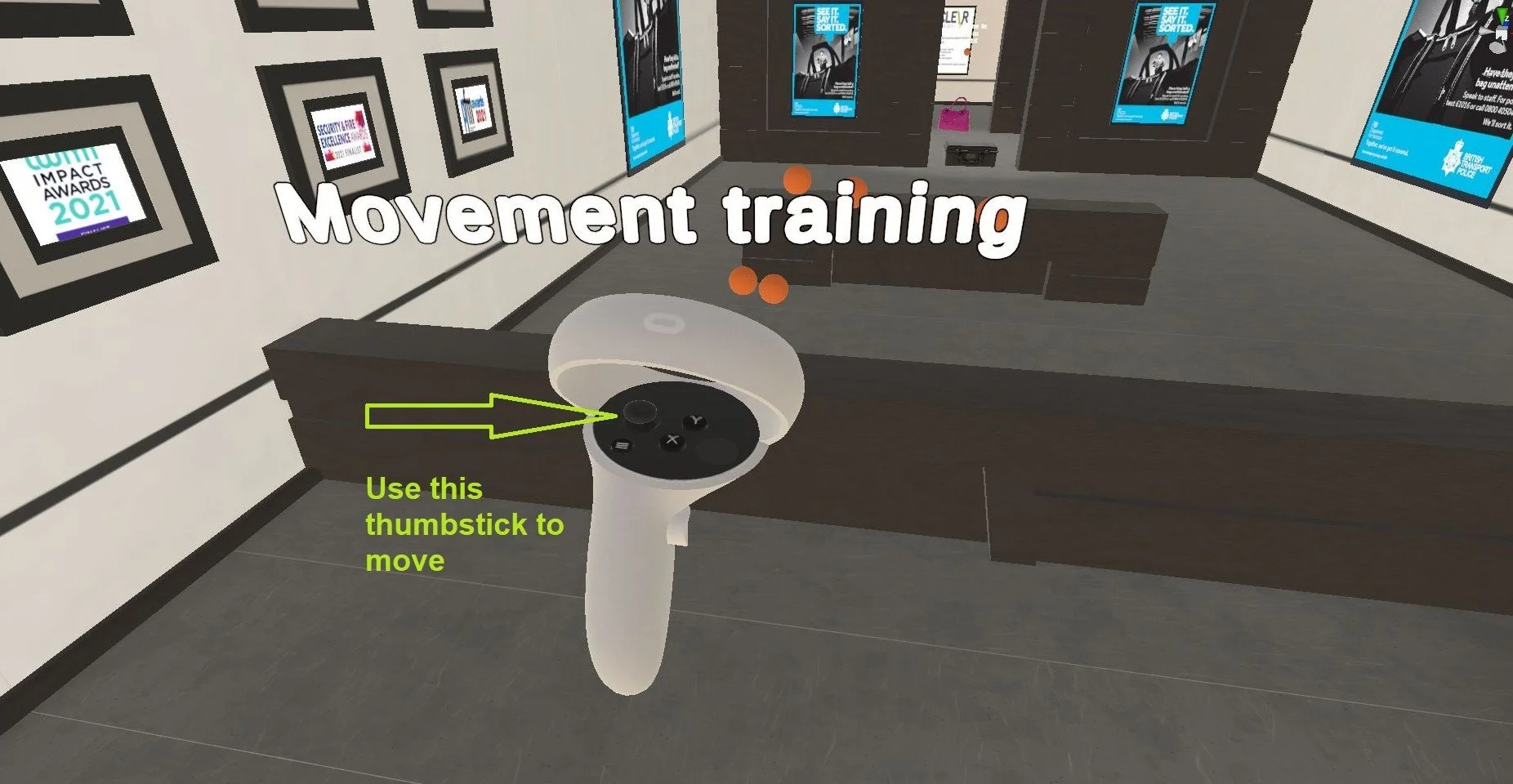
Many trainees have never used VR. Every programme starts with a short orientation: entering a name, learning to move, turn and grab, and practising in a safe area before the assessed part begins. Trainees stay seated and can pause or take a break at any time.
Assessment and results
Timed exercises and scored tasks show how well each trainee has understood the role. A results screen gives each trainee instant feedback. Cloud reporting gives managers individual and cohort feedback, so they can see each trainee's results and spot trends across the whole cohort.
Discovery Days
Every project starts by agreeing the goals with the people who matter. A Discovery Day takes your team and stakeholders through what VR can and can't do. By the end of it you have a project outline, an internal team and a timescale.
Case study: Churchill, VR training for rail cleaning teams
Churchill's VR training programme, which we built with their team, won the IWFM Impact Award for Technology Innovation in 2023.
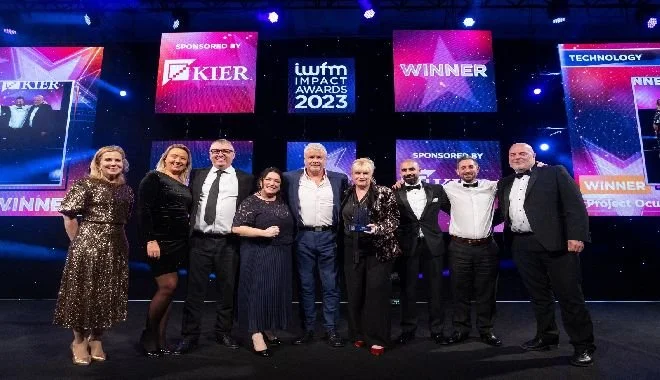
Photo: IWFM Impact Awards 2023 winners (Technology Innovation category), as published by FMJ, 20 October 2023.
The challenge. Churchill is one of the UK's leading facilities management providers, and rail is one of its key sectors. Its cleaning teams turn trains around against the clock while meeting service quality, health and safety and security standards. Churchill wanted to replace training folders with something more engaging and memorable, because not everyone learns by reading.
How we worked. We started with a Discovery Day, taking the Churchill team and external stakeholders through the good, the bad and the ugly of VR. By the end of the day there was a project outline, an internal project team and a timescale. We then worked with Churchill's team every week, sharing builds they could try on their own headsets. People from the intended user base and Churchill's customers were brought in to test. The programme was rolled out only when every stakeholder agreed it met the need.
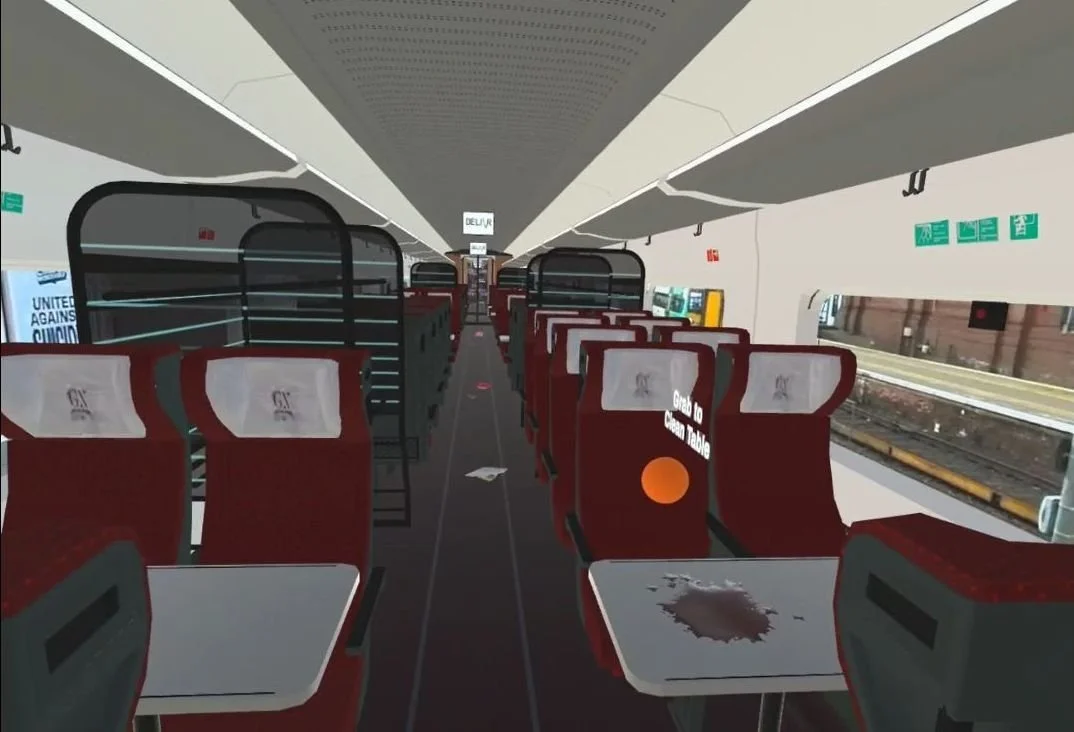
What we built. DELIVR, a VR training app for standalone Meta Quest 2 headsets:
Training centre: a branded welcome, then practice with the controllers.
Training zones: the HOT protocol for suspicious items; toilet checks to Churchill's service quality standards; safe handling of sharps; and an equipment zone where trainees collect and learn about each item.
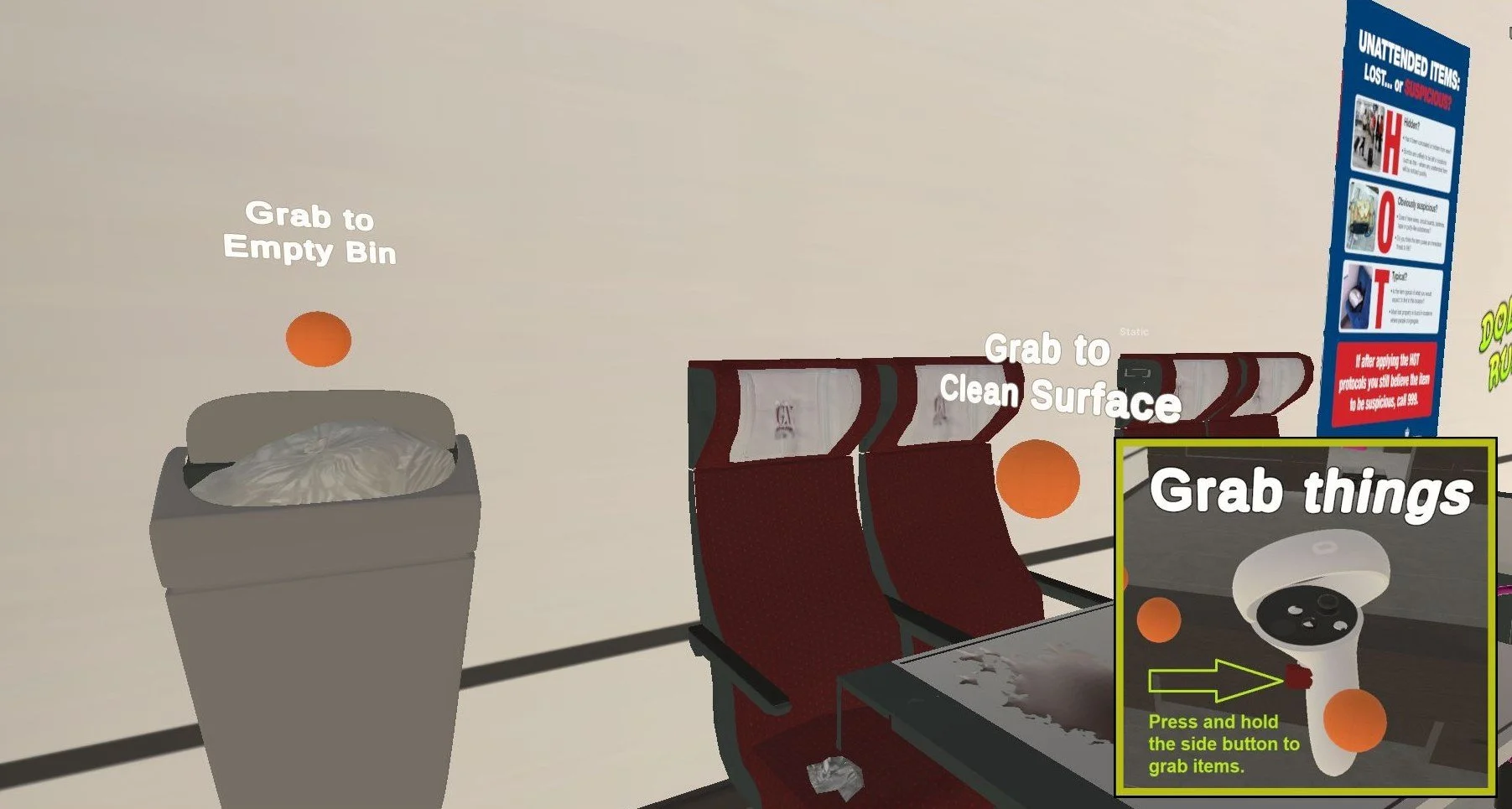
Practice zone: emptying bins, picking up litter, cleaning surfaces and reporting graffiti.
Train simulator: trainees have three minutes to get a virtual carriage to standard before the train leaves the station.
Feedback centre: individual results for every task, plus quick thumbs-up/thumbs-down feedback on the session.
Cloud reporting for managers: individual and cohort feedback, so managers can see each trainee's results and cohort trends.
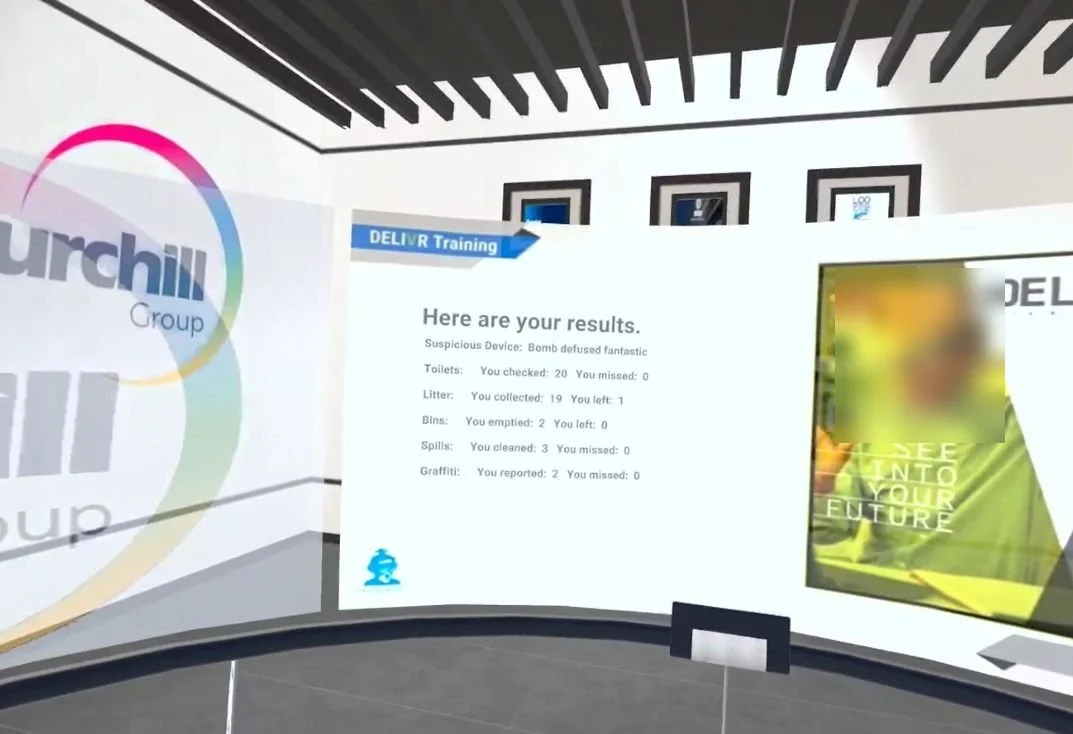
The result.
At the IWFM Impact Awards on 16 October 2023, Project Oculus won the Technology Innovation category.
The judges' citation praised its innovation and agile methods, "driven by VR design partners across weekly development phases".
Hundreds of trainees have been through the programme.
Churchill has plans to integrate it into its wider HR solutions.
“With a VR experience, our cleaners get immersed in a realistic, digital rail carriage environment where they get to see, hear, touch, move around and interact during their training.”
More training and learning projects
Alongside Churchill, we have built training and learning experiences on several other projects. Live examples:
Procter & Gamble: a 6DoF virtual room where staff and trade-show visitors explore a giant razor that breaks apart to reveal key facts.
HS2 Old Oak Common: the VR experience we built for the WSP-led design team, where participants' journeys were recorded with eye tracking, showing how VR captures behaviour as well as delivering content.
Who it's for
Facilities management, cleaning and security providers
Rail, transport and infrastructure operators
HR, L&D and health and safety teams
Contractors bidding for work who need to show a better approach to training
Any organisation with practical, procedural or safety-critical tasks that are hard to rehearse on the job
How a project works
Discovery. A short session, or a full Discovery Day, to agree the learning goals, the tasks and who your trainees are.
Scenario design. You bring the expertise and the standards; we storyboard the scenes, tasks and scoring with you.
Weekly builds. You try early builds on your own headsets every week, and we refine from the feedback.
User testing. Real trainees and stakeholders test it before rollout.
Rollout and support. We help you deploy to your headsets and keep the programme running.
“We know the technology, you know your message and audience; in that overlap great teamwork produces award-winning results.”
Why VRCraftworks
Building VR and AR experiences since 2014, in Unity, for public bodies, charities and global brands.
Churchill's VR training programme, which we built with their team, won the IWFM Impact Award for Technology Innovation in 2023.
A collaborative, weekly-build process that the IWFM judges singled out.
Small, senior team: you deal directly with the people building your training.
Frequently asked questions
What headsets do you use?
Churchill's DELIVR programme runs on Meta Quest 2, a standalone headset, so there are no PCs or cables and training can run in a training room, at a depot or on site. We'll recommend the right headset for your project.
Do trainees need any VR experience?
No. Every programme starts with a short orientation that teaches people to move, turn and pick things up before the training begins.
Can you use our existing training materials?
Yes. Your manuals, standards, videos and slides are the starting point. We turn them into tasks, narration and on-screen information.
Can managers see how trainees did?
Yes. Trainees get a results screen at the end, and cloud reporting gives managers individual and cohort feedback: each trainee's results and trends across the cohort.
Is VR training suitable for health and safety?
Yes. It's one of the best uses of VR: people can practise responding to hazards and emergencies that would be dangerous, expensive or impossible to rehearse for real.
Where are you based?
Our studio is in Brighton, and we build VR training for organisations in London and across the UK.
Ready to build training people remember?
Tell us about your team and what they need to learn. We'll tell you honestly whether VR is the right tool.
Call 01273 569010