VR health and safety training: when it beats the classroom, and when it doesn't
Most health and safety training still happens in a classroom or from a folder: slides, a video, a sign-off sheet. For a lot of topics that's fine. But for practical, frontline work, the gap between knowing what to do and actually doing it under pressure is where incidents happen. That gap is where virtual reality (VR) earns its place.
We've built VR training for frontline teams, including Churchill's programme for rail cleaning staff, which won the IWFM Impact Award for Technology Innovation in 2023. Here's our honest view of when VR beats the classroom, and when it doesn't.
What VR does well in health and safety training
Practising the moments that matter most and happen least
Some situations are too rare, too dangerous or too disruptive to rehearse on the job: finding a suspicious item, handling sharps, responding to an emergency. In VR, trainees can face these situations as often as they need, and get them wrong without anyone getting hurt. Mistakes become memorable lessons instead of incidents.
Learning by doing, not by reading
Trainees walk the space, pick up the right equipment and carry out the real sequence of tasks. That suits people who learn by doing, including neurodiverse learners and people for whom a dense manual is a barrier, not a help.
The same standard, every time
Every trainee gets the same scenario, the same standard and the same assessment, whoever is running the session and wherever it takes place. With standalone headsets such as Meta Quest, training can run in a training room, at a depot or on site, with no PCs or cables.
Evidence, not just a signature
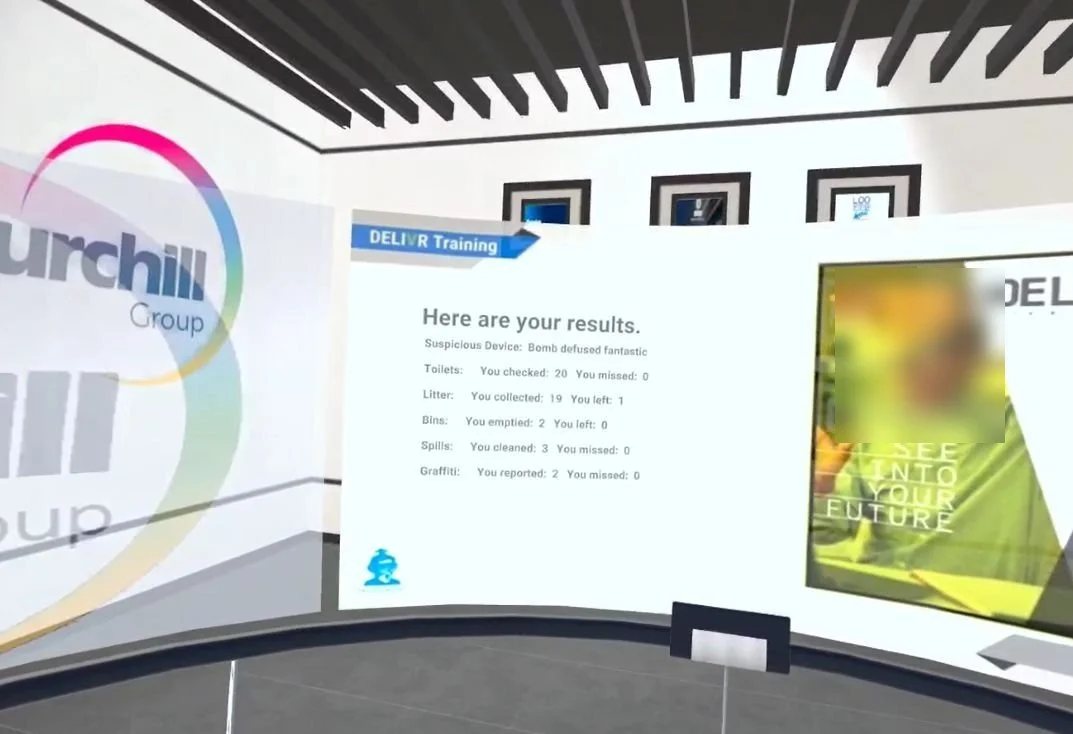
Timed exercises and scored tasks show how well each person has understood the job. Trainees see their results straight away, and cloud reporting lets managers see individual results and trends across a whole cohort. That's far more useful than a signed attendance sheet.
When VR is the wrong tool
VR isn't the answer to every training need, and we'll say so when it isn't.
- Pure knowledge and policy. If the goal is to understand a policy, a regulation or a reporting line, a good e-learning module or a conversation is quicker and cheaper.
- Content that changes every month. VR scenarios take time to build. If procedures change constantly, keep the fast-changing parts outside the headset.
- No plan for the headsets. Someone has to charge, clean, update and look after the devices. If nobody owns that, the programme will stall.
- No time for onboarding. Many trainees have never used VR. Skipping a short orientation leads to frustration, and frustration leads to bad data.
The best programmes use VR for the practical, high-consequence parts of a role, and keep everything else in the formats that already work.
What it looked like for Churchill
Churchill is one of the UK's leading facilities management providers, and rail is one of its key sectors. Its cleaning teams turn trains around against the clock while meeting service quality, health and safety and security standards. Churchill wanted to replace training folders with something more engaging and memorable, because not everyone learns by reading.
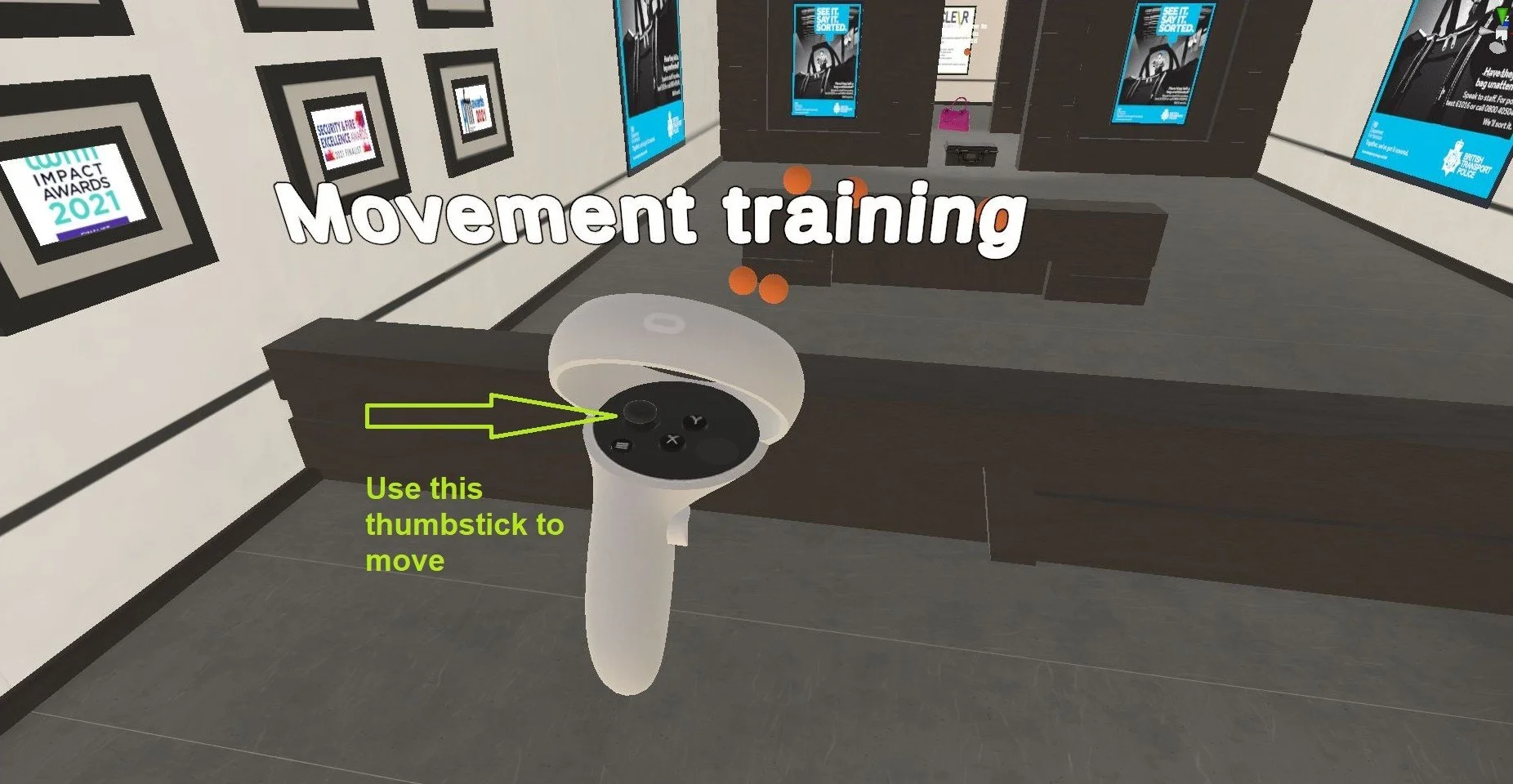
We built DELIVR with Churchill's team, for standalone Meta Quest 2 headsets. Trainees start in a training centre where they learn to move, turn and grab. They then work through training zones: the rail industry's HOT protocol for suspicious items ("See it. Say it. Sorted."), toilet checks to Churchill's service standards, safe handling of sharps and an equipment zone. A train simulator gives them three minutes to get a virtual carriage to standard before the train leaves. Trainees stay seated and can pause at any time.
"With a VR experience, our cleaners get immersed in a realistic, digital rail carriage environment where they get to see, hear, touch, move around and interact during their training."
Mel Taylor, Group HR Director, Churchill (Churchill press release, October 2023)
Hundreds of trainees have been through the programme. At the IWFM Impact Awards in October 2023 it won the Technology Innovation category, with the judges praising its agile methods, "driven by VR design partners across weekly development phases". Read the full Churchill case study and the IWFM award news.
How to tell if VR is right for your training
Ask three questions:
- Is the task practical? Does it involve a space, equipment and a sequence of actions?
- Is it hard to rehearse for real? Is it dangerous, rare, expensive or disruptive to practise on the job?
- Does it matter if people get it wrong? Are the consequences serious for safety, security or service?
If the answer to all three is yes, VR is worth a serious look. If it's mostly no, a cheaper format will probably do the job.
Where to start
The projects that work start with the people who matter in the same room. A Discovery Day puts your trainers, subject experts and budget holders in headsets, then turns your idea into a written, costed plan with a clear yes or no. Churchill's programme started exactly that way.
If you'd rather have a specific question answered first, such as what a supplier's proposal should cost, our XR consultancy can help.
See how we build VR training, or get in touch to talk it through.